<br />
<b>Warning</b>:  Creating default object from empty value in <b>/www/htdocs/w00c90d5/v22app/wp-content/plugins/wpseo/wpseo.php</b> on line <b>14</b><br />
<?xml version="1.0" encoding="UTF-8"?>
<rss version="2.0"
	xmlns:content="http://purl.org/rss/1.0/modules/content/"
	xmlns:wfw="http://wellformedweb.org/CommentAPI/"
	xmlns:dc="http://purl.org/dc/elements/1.1/"
	xmlns:atom="http://www.w3.org/2005/Atom"
	xmlns:sy="http://purl.org/rss/1.0/modules/syndication/"
	xmlns:slash="http://purl.org/rss/1.0/modules/slash/"
	>

<channel>
	<title>mathehilfe24 &#187; Integrale</title>
	<atom:link href="http://back.mathehilfe24.de/?feed=rss2&#038;tag=integrale" rel="self" type="application/rss+xml" />
	<link>http://back.mathehilfe24.de</link>
	<description>Mathe Nachhilfe Online</description>
	<lastBuildDate>Fri, 01 Feb 2013 22:45:12 +0000</lastBuildDate>
	<language>de-DE</language>
	<sy:updatePeriod>hourly</sy:updatePeriod>
	<sy:updateFrequency>1</sy:updateFrequency>
	<generator>http://wordpress.org/?v=</generator>
		<item>
		<title>Fläche zwischen zwei Funktionen berechnen &#8211; Integralrechnung</title>
		<link>http://back.mathehilfe24.de/?p=4196</link>
		<comments>http://back.mathehilfe24.de/?p=4196#comments</comments>
		<pubDate>Thu, 28 Apr 2011 10:59:07 +0000</pubDate>
		<dc:creator>Vitali Pritzkau</dc:creator>
				<category><![CDATA[11.-Klasse]]></category>
		<category><![CDATA[12.-Klasse]]></category>
		<category><![CDATA[Integral-Rechnung]]></category>
		<category><![CDATA[Klassen]]></category>
		<category><![CDATA[Themen]]></category>
		<category><![CDATA[Differenzfunktion]]></category>
		<category><![CDATA[Flächenberechnung]]></category>
		<category><![CDATA[Integrale]]></category>
		<category><![CDATA[Integralrechnung]]></category>
		<category><![CDATA[pq-Formel]]></category>
		<category><![CDATA[Substitution]]></category>

		<guid isPermaLink="false">http://www.mathehilfe24.de/?p=4196</guid>
		<description><![CDATA[Aufgabe: &#160; Gegeben sind die Funktionen f durch ; xeR und g durch ; xeR. Ihre Schaubilder sind K und G. K und G begrenzen drei Flächenstücke. Berechnen Sie den Gesamtflächeninhalt der drei Flächenstücke. [...]]]></description>
			<content:encoded><![CDATA[<iframe src="http://player.vimeo.com/video/22991262?title=0&amp;byline=0&amp;portrait=0&amp;autoplay=1" width="640" height="360" frameborder="0"></iframe><p><img src='http://back.mathehilfe24.de/wp-content/plugins/simple-post-thumbnails/timthumb.php?src=/wp-content/thumbnails/4196.jpg&amp;w=200&amp;h=150&amp;zc=1&amp;ft=jpg' alt='post thumbnail' /></p>
<p><a></a></p>
<h2>Aufgabe:<br />
<a></a>&nbsp;</p>
<ul>
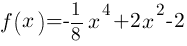
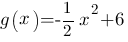
<li> Gegeben sind die Funktionen f durch <img src="http://back.mathehilfe24.de/wp-content/plugins/wpmathpub/phpmathpublisher/img/math_980_899d528a28b092096726d16e7af9afb7.png" style="vertical-align:-20px; display: inline-block ;" alt="f(x) = -1/8x^4+2x^2-2" title="f(x) = -1/8x^4+2x^2-2"/> ; xeR und g durch <img src="http://back.mathehilfe24.de/wp-content/plugins/wpmathpub/phpmathpublisher/img/math_982_7a22616c343e0bd0c3186beed5e99233.png" style="vertical-align:-18px; display: inline-block ;" alt="g(x)=-1/2x^2+6" title="g(x)=-1/2x^2+6"/> ; xeR. Ihre Schaubilder sind K und G. K und G begrenzen drei Flächenstücke.<br />
Berechnen Sie den Gesamtflächeninhalt der drei Flächenstücke.</li>
</ul>
</h2>
<p><a></a></p>
<p><div id="attachment_4251" class="wp-caption aligncenter" style="width: 498px"><a href="http://www.mathehilfe24.de/wp-content/uploads/2011/01/s128_Bild-Funktion.jpg"><img class="size-full wp-image-4251" title="Integralrechnung, Integrieren, Integral" src="http://www.mathehilfe24.de/wp-content/uploads/2011/01/s128_Bild-Funktion.jpg" alt="Integralrechnung, Integral" width="488" height="272" /></a><p class="wp-caption-text">Schaubild von f (x) und g (x)</p></div><br />
Zwei Funktionen, die sich an mindestens zwei Stellen schneiden, schließen mindestens eine Fläche ein. In diesem Videoclip geht es darum, dass die von zwei Funktionen eingeschlossenen Flächen zusammengerechnet werden sollen. Es ist eine umfangreiche Aufgabe, bei der die pq-Formel, eine Substitution, die Bildung einer Differenzfunktion und die Integralrechnung vorkommen.<br />
<a></a><br />
Dies ist ein Wunschvideoclip für Clemens.<br />
<a></a><br />
Viel Erfolg mit Mathehilfe24<br />
Dein Mathehilfe24-Team</p>
<p style="text-align: right;">s128</p>
<p><strong>Mathehilfe24 &#8230;mit UNS kannst DU rechnen!</strong></p>
]]></content:encoded>
			<wfw:commentRss>http://back.mathehilfe24.de/?feed=rss2&#038;p=4196</wfw:commentRss>
		<slash:comments>3</slash:comments>
		</item>
		<item>
		<title>Bestimmtes Integral ∫ 1/x + e^x dx</title>
		<link>http://back.mathehilfe24.de/?p=925</link>
		<comments>http://back.mathehilfe24.de/?p=925#comments</comments>
		<pubDate>Sat, 20 Nov 2010 11:49:10 +0000</pubDate>
		<dc:creator>Vitali Pritzkau</dc:creator>
				<category><![CDATA[11.-Klasse]]></category>
		<category><![CDATA[12.-Klasse]]></category>
		<category><![CDATA[Integral-Rechnung]]></category>
		<category><![CDATA[Bestimmtes Integral]]></category>
		<category><![CDATA[e-Funktion]]></category>
		<category><![CDATA[Integrale]]></category>
		<category><![CDATA[Integrieren]]></category>
		<category><![CDATA[ln]]></category>
		<category><![CDATA[Logarithmus]]></category>
		<category><![CDATA[Logarithmus naturalis]]></category>

		<guid isPermaLink="false">http://www.mathehilfe24.de/?p=925</guid>
		<description><![CDATA[Aufgabe: ∫ 1/x + e^x dx Bei der Integralrechnung berechnet man Flächen. Bei einem sogenannten “Betimmten Integral” sind die untere sowie die obere Grenze angegeben. Im konkret vorliegenden Fall wird die Fläche, die von [...]]]></description>
			<content:encoded><![CDATA[<iframe src="http://player.vimeo.com/video/16658842?title=0&amp;byline=0&amp;portrait=0" width="640" height="360" frameborder="0"></iframe><p><img src='http://back.mathehilfe24.de/wp-content/plugins/simple-post-thumbnails/timthumb.php?src=/wp-content/thumbnails/925.jpg&amp;w=200&amp;h=150&amp;zc=1&amp;ft=jpg' alt='post thumbnail' /></p>
<p><strong>Aufgabe: ∫ 1/x + e^x dx<br />
</strong></p>
<p>Bei der Integralrechnung berechnet man Flächen. Bei einem sogenannten “Betimmten Integral” sind die untere sowie die obere Grenze angegeben. Im konkret vorliegenden Fall wird die Fläche, die von der Funktion 1/x + e^x in den Grenzen von 1 bis 2 eingeschlossen wird, berechnet. Wie das geht zeigt Stefan in diesem Videoclip.</p>
<p><strong>Viel Erfolg beim Mathe lernen<br />
Dein Mathehilfe24-Team</strong></p>
<p style="text-align: right;">s23</p>
]]></content:encoded>
			<wfw:commentRss>http://back.mathehilfe24.de/?feed=rss2&#038;p=925</wfw:commentRss>
		<slash:comments>2</slash:comments>
		</item>
		<item>
		<title>Bestimmtes Integral_Partielle Integration ∫ x cos(x) dx</title>
		<link>http://back.mathehilfe24.de/?p=930</link>
		<comments>http://back.mathehilfe24.de/?p=930#comments</comments>
		<pubDate>Sat, 20 Nov 2010 11:48:48 +0000</pubDate>
		<dc:creator>Vitali Pritzkau</dc:creator>
				<category><![CDATA[11.-Klasse]]></category>
		<category><![CDATA[12.-Klasse]]></category>
		<category><![CDATA[Integral-Rechnung]]></category>
		<category><![CDATA[Klassen]]></category>
		<category><![CDATA[Aufleiten]]></category>
		<category><![CDATA[Bestimmtes Integral]]></category>
		<category><![CDATA[cos]]></category>
		<category><![CDATA[Einheitskreis]]></category>
		<category><![CDATA[Integrale]]></category>
		<category><![CDATA[Integralrechnung]]></category>
		<category><![CDATA[Integrieren]]></category>
		<category><![CDATA[Partielle Integration]]></category>
		<category><![CDATA[sin]]></category>

		<guid isPermaLink="false">http://www.mathehilfe24.de/?p=930</guid>
		<description><![CDATA[Aufgabe: ∫ x cos(x) dx In der Integralrechnung gibt es mehrere Regeln, die es zu beachten gilt. Bei den Rechenregeln gibt es unter anderem auch die Regeln zur &#8220;Partiellen Integration&#8221;. Wie der Name bereits [...]]]></description>
			<content:encoded><![CDATA[<iframe src="http://player.vimeo.com/video/16662542?title=0&amp;byline=0&amp;portrait=0" width="640" height="480" frameborder="0"></iframe><p>s25_Bestimmtes Integral_Partielle Integration_Beispiel 2_s25<p><img src='http://back.mathehilfe24.de/wp-content/plugins/simple-post-thumbnails/timthumb.php?src=/wp-content/thumbnails/930.jpg&amp;w=200&amp;h=150&amp;zc=1&amp;ft=jpg' alt='post thumbnail' /></p>
<p><strong>Aufgabe: ∫ x cos(x) dx</strong></p>
<p>In der Integralrechnung gibt es mehrere Regeln, die es zu beachten gilt. Bei den Rechenregeln gibt es unter anderem auch die Regeln zur &#8220;Partiellen Integration&#8221;. Wie der Name bereits andeutet, geht es darum, einen Teil (Part) zu integrieren. Welchen man sich dazu aussucht und wie das geht zeigt Stefan in diesem Videoclip.</p>
<p><strong>Viel Erfolg beim Mathe lernen</strong><br />
<strong>Dein Mathehilfe24-Team</strong></p>
<p style="text-align: right;">s25<strong><br style="text-align: right;" /> </strong></p>
]]></content:encoded>
			<wfw:commentRss>http://back.mathehilfe24.de/?feed=rss2&#038;p=930</wfw:commentRss>
		<slash:comments>3</slash:comments>
		</item>
		<item>
		<title>Bestimmtes Integral &#8211; Partielle Integration &#8211; Beispiel 1</title>
		<link>http://back.mathehilfe24.de/?p=949</link>
		<comments>http://back.mathehilfe24.de/?p=949#comments</comments>
		<pubDate>Sat, 20 Nov 2010 11:48:24 +0000</pubDate>
		<dc:creator>Vitali Pritzkau</dc:creator>
				<category><![CDATA[11.-Klasse]]></category>
		<category><![CDATA[12.-Klasse]]></category>
		<category><![CDATA[Integral-Rechnung]]></category>
		<category><![CDATA[Klassen]]></category>
		<category><![CDATA[Bestimmtes Integral]]></category>
		<category><![CDATA[Integrale]]></category>
		<category><![CDATA[Integrieren]]></category>
		<category><![CDATA[ln]]></category>
		<category><![CDATA[Logarithmus]]></category>
		<category><![CDATA[Logarithmus naturalis]]></category>
		<category><![CDATA[Partielle Integration]]></category>

		<guid isPermaLink="false">http://www.mathehilfe24.de/?p=949</guid>
		<description><![CDATA[Wie bestimme ich das Integral einer Funktion? In diesem Video wird die Partielle Integration von anhand eines Beispiels erklärt. Viel Erfolg mit Mathehilfe24 Dein Mathehilfe24-Team s24 Mathehilfe24 &#8230;mit UNS kannst DU rechnen!]]></description>
			<content:encoded><![CDATA[<iframe src="http://player.vimeo.com/video/16796670?title=0&amp;byline=0&amp;portrait=0" width="640" height="360" frameborder="0"></iframe><p><img src='http://back.mathehilfe24.de/wp-content/plugins/simple-post-thumbnails/timthumb.php?src=/wp-content/thumbnails/949.jpg&amp;w=200&amp;h=150&amp;zc=1&amp;ft=jpg' alt='post thumbnail' /></p>
<p><a></a><br />
Wie bestimme ich das Integral einer Funktion? In diesem Video wird die Partielle Integration von  anhand eines Beispiels erklärt.</p>
<p>Viel Erfolg mit Mathehilfe24<br />
Dein Mathehilfe24-Team</p>
<p style="text-align: right;">s24</p>
<p><strong>Mathehilfe24 &#8230;mit UNS kannst DU rechnen!</strong></p>
]]></content:encoded>
			<wfw:commentRss>http://back.mathehilfe24.de/?feed=rss2&#038;p=949</wfw:commentRss>
		<slash:comments>0</slash:comments>
		</item>
		<item>
		<title>Bestimmtes Integral ∫ 1/√(x³) dx</title>
		<link>http://back.mathehilfe24.de/?p=922</link>
		<comments>http://back.mathehilfe24.de/?p=922#comments</comments>
		<pubDate>Sat, 13 Nov 2010 16:18:53 +0000</pubDate>
		<dc:creator>Vitali Pritzkau</dc:creator>
				<category><![CDATA[11.-Klasse]]></category>
		<category><![CDATA[12.-Klasse]]></category>
		<category><![CDATA[Integral-Rechnung]]></category>
		<category><![CDATA[Integrale]]></category>
		<category><![CDATA[Integralrechnung]]></category>
		<category><![CDATA[Integrieren]]></category>
		<category><![CDATA[Wurzelterm]]></category>

		<guid isPermaLink="false">http://www.mathehilfe24.de/?p=922</guid>
		<description><![CDATA[Aufgabe: ∫ 1/√(x³) dx Bei der Integralrechnung berechnet man Flächen. Bei einem sogenannten “Betimmten Integral” sind die untere sowie die obere Grenze angegeben. Im konkret vorliegenden Fall wird die Fläche, die von der Funktion [...]]]></description>
			<content:encoded><![CDATA[<iframe src="http://player.vimeo.com/video/16660841?title=0&amp;byline=0&amp;portrait=0" width="640" height="480" frameborder="0"></iframe><p>s22_Integrale_Beispiel 4_s22<p><img src='http://back.mathehilfe24.de/wp-content/plugins/simple-post-thumbnails/timthumb.php?src=/wp-content/thumbnails/922.jpg&amp;w=200&amp;h=150&amp;zc=1&amp;ft=jpg' alt='post thumbnail' /></p>
<p><strong>Aufgabe: ∫ 1/√(x³) dx<br />
</strong></p>
<p>Bei der Integralrechnung berechnet man Flächen. Bei einem sogenannten “Betimmten Integral” sind die untere sowie die obere Grenze angegeben. Im konkret vorliegenden Fall wird die Fläche, die von der Funktion 1/√(x³) in den Grenzen von 1 bis 2 eingeschlossen wird, berechnet. Wie das geht zeigt Stefan in diesem Videoclip.</p>
<p><strong>Viel Erfolg beim Mathe lernen<br />
Dein Mathehilfe24-Team</strong></p>
<p style="text-align: right;">s22</p>
]]></content:encoded>
			<wfw:commentRss>http://back.mathehilfe24.de/?feed=rss2&#038;p=922</wfw:commentRss>
		<slash:comments>2</slash:comments>
		</item>
		<item>
		<title>Bestimmtes Integral ∫ sin(x) + cos(x) dx</title>
		<link>http://back.mathehilfe24.de/?p=913</link>
		<comments>http://back.mathehilfe24.de/?p=913#comments</comments>
		<pubDate>Sat, 13 Nov 2010 15:50:35 +0000</pubDate>
		<dc:creator>Vitali Pritzkau</dc:creator>
				<category><![CDATA[11.-Klasse]]></category>
		<category><![CDATA[12.-Klasse]]></category>
		<category><![CDATA[Integral-Rechnung]]></category>
		<category><![CDATA[Bestimmtes Integral]]></category>
		<category><![CDATA[Cosinus]]></category>
		<category><![CDATA[Einheitskreis]]></category>
		<category><![CDATA[Integrale]]></category>
		<category><![CDATA[Integralrechnung]]></category>
		<category><![CDATA[Sinus]]></category>

		<guid isPermaLink="false">http://www.mathehilfe24.de/?p=913</guid>
		<description><![CDATA[Aufgabe: ∫ sin(x) + cos(x) dx Bei der Integralrechnung berechnet man Flächen. Bei einem sogenannten &#8220;Betimmten Integral&#8221; sind die untere sowie die obere Grenze angegeben. Im konkret vorliegenden Fall wird also die Fläche, die [...]]]></description>
			<content:encoded><![CDATA[<iframe src="http://player.vimeo.com/video/16656504?title=0&amp;byline=0&amp;portrait=0" width="640" height="480" frameborder="0"></iframe><p>s20_Bestimmtes Integral_Beispiel 2_s20<p><img src='http://back.mathehilfe24.de/wp-content/plugins/simple-post-thumbnails/timthumb.php?src=/wp-content/thumbnails/913.jpg&amp;w=200&amp;h=150&amp;zc=1&amp;ft=jpg' alt='post thumbnail' /></p>
<p>Aufgabe: ∫ sin(x) + cos(x) dx</p>
<p>Bei der Integralrechnung berechnet man Flächen. Bei einem sogenannten &#8220;Betimmten Integral&#8221; sind die untere sowie die obere Grenze angegeben. Im konkret vorliegenden Fall wird also die Fläche, die von der Funktion sin(x) + cos(x) in den Grenzen von 0 bis pi eingeschlossen wird, berechnet. Wie das geht zeigt Stefan in diesem Videoclip.</p>
<p><strong>Viel Erfolg beim Mathe lernen<br />
Dein Mathehilfe24-Team</strong></p>
<p style="text-align: right;">s20</p>
]]></content:encoded>
			<wfw:commentRss>http://back.mathehilfe24.de/?feed=rss2&#038;p=913</wfw:commentRss>
		<slash:comments>0</slash:comments>
		</item>
		<item>
		<title>Partielle Integration ∫ x ln(x) dx</title>
		<link>http://back.mathehilfe24.de/?p=887</link>
		<comments>http://back.mathehilfe24.de/?p=887#comments</comments>
		<pubDate>Sat, 13 Nov 2010 14:30:37 +0000</pubDate>
		<dc:creator>Vitali Pritzkau</dc:creator>
				<category><![CDATA[11.-Klasse]]></category>
		<category><![CDATA[12.-Klasse]]></category>
		<category><![CDATA[Integral-Rechnung]]></category>
		<category><![CDATA[Aufleiten]]></category>
		<category><![CDATA[Integrale]]></category>
		<category><![CDATA[Integralrechnung]]></category>
		<category><![CDATA[Integrieren]]></category>
		<category><![CDATA[Partielle Integration]]></category>

		<guid isPermaLink="false">http://www.mathehilfe24.de/?p=887</guid>
		<description><![CDATA[Aufgabe: ∫ x ln(x) dx In der Integralrechnung gibt es mehrere Regeln, die es zu beachten gilt. Bei den Rechenregeln gibt es unter anderem auch die Regeln zur &#8220;Partiellen Integration&#8221;. Wie der Name bereits [...]]]></description>
			<content:encoded><![CDATA[<iframe src="http://player.vimeo.com/video/16655522?title=0&amp;byline=0&amp;portrait=0" width="640" height="480" frameborder="0"></iframe><p>s18_Partielle Integration_Beispiel 2_s18<p><img src='http://back.mathehilfe24.de/wp-content/plugins/simple-post-thumbnails/timthumb.php?src=/wp-content/thumbnails/887.jpg&amp;w=200&amp;h=150&amp;zc=1&amp;ft=jpg' alt='post thumbnail' /></p>
<p><strong>Aufgabe: ∫ x ln(x) dx</strong></p>
<p>In der Integralrechnung gibt es mehrere Regeln, die es zu beachten gilt. Bei den Rechenregeln gibt es unter anderem auch die Regeln zur &#8220;Partiellen Integration&#8221;. Wie der Name bereits andeutet, geht es darum, einen Teil (Part) zu integrieren. Welchen man sich dazu aussucht und wie das geht zeigt Stefan in diesem Videoclip.</p>
<p><strong>Viel Erfolg beim Mathe lernen</strong><br />
<strong>Dein Mathehilfe24-Team</strong></p>
<p style="text-align: right;">s18<strong><br />
</strong></p>
]]></content:encoded>
			<wfw:commentRss>http://back.mathehilfe24.de/?feed=rss2&#038;p=887</wfw:commentRss>
		<slash:comments>0</slash:comments>
		</item>
		<item>
		<title>Integralrechnung_sin (x) dx</title>
		<link>http://back.mathehilfe24.de/?p=870</link>
		<comments>http://back.mathehilfe24.de/?p=870#comments</comments>
		<pubDate>Fri, 12 Nov 2010 21:53:24 +0000</pubDate>
		<dc:creator>Vitali Pritzkau</dc:creator>
				<category><![CDATA[11.-Klasse]]></category>
		<category><![CDATA[12.-Klasse]]></category>
		<category><![CDATA[Integral-Rechnung]]></category>
		<category><![CDATA[Aufleiten]]></category>
		<category><![CDATA[Cosinus]]></category>
		<category><![CDATA[Integrale]]></category>
		<category><![CDATA[Integralrechnung]]></category>
		<category><![CDATA[Integrieren]]></category>
		<category><![CDATA[Sinus]]></category>

		<guid isPermaLink="false">http://www.mathehilfe24.de/?p=870</guid>
		<description><![CDATA[Durch Integralrechnung lassen sich Flächen berechnen. Im vorliegenden Beispiel geht es um die Fläche, die bei einer Sinuskurve zwischen 0 und pi eingeschlossen wird. Wie ein solches sogenanntes &#8220;Bestimmtes Integral&#8221; gelöst wird zeigt Stefan [...]]]></description>
			<content:encoded><![CDATA[<iframe src="http://player.vimeo.com/video/16655504?title=0&amp;byline=0&amp;portrait=0" width="640" height="480" frameborder="0"></iframe><p>s16_Integralrechnung_sin (x) dx_s16<p><img src='http://back.mathehilfe24.de/wp-content/plugins/simple-post-thumbnails/timthumb.php?src=/wp-content/thumbnails/870.jpg&amp;w=200&amp;h=150&amp;zc=1&amp;ft=jpg' alt='post thumbnail' /></p>
<p>Durch Integralrechnung lassen sich Flächen berechnen. Im vorliegenden Beispiel geht es um die Fläche, die bei einer Sinuskurve zwischen 0 und pi eingeschlossen wird. Wie ein solches sogenanntes &#8220;Bestimmtes Integral&#8221; gelöst wird zeigt Stefan in diesem Videoclip.</p>
<p style="text-align: right;">S16</p>
<p><strong>Viel Erfolg beim Mathe lernen<br />
Dein Mathehilfe24-Team</strong></p>
]]></content:encoded>
			<wfw:commentRss>http://back.mathehilfe24.de/?feed=rss2&#038;p=870</wfw:commentRss>
		<slash:comments>0</slash:comments>
		</item>
		<item>
		<title>Integrieren-Differenzieren_Grundlagen</title>
		<link>http://back.mathehilfe24.de/?p=867</link>
		<comments>http://back.mathehilfe24.de/?p=867#comments</comments>
		<pubDate>Fri, 12 Nov 2010 21:30:10 +0000</pubDate>
		<dc:creator>Vitali Pritzkau</dc:creator>
				<category><![CDATA[10.-Klasse]]></category>
		<category><![CDATA[11.-Klasse]]></category>
		<category><![CDATA[Klassen]]></category>
		<category><![CDATA[Trigonometrie]]></category>
		<category><![CDATA[Ableiten]]></category>
		<category><![CDATA[Aufleiten]]></category>
		<category><![CDATA[Cosinus]]></category>
		<category><![CDATA[Differenzieren]]></category>
		<category><![CDATA[Integrale]]></category>
		<category><![CDATA[Integralrechnung]]></category>
		<category><![CDATA[Integrieren]]></category>
		<category><![CDATA[Sinus]]></category>

		<guid isPermaLink="false">http://www.mathehilfe24.de/?p=867</guid>
		<description><![CDATA[Die erste Ableitung einer Funktion ist ihre Steigung. Die trigonometrischen Größen Sinus und Cosinus lassen sich sehr leicht durch grafisch unterstützt vermittelte Ableitungen erklären. Stefan zeigt in diesem Videoclip, wie die beiden Größen zusammenhängen, [...]]]></description>
			<content:encoded><![CDATA[<iframe src="http://player.vimeo.com/video/16655495?title=0&amp;byline=0&amp;portrait=0" width="640" height="480" frameborder="0"></iframe><p>s15_Integrieren-Differenzieren_Grundlagen_s15<p><img src='http://back.mathehilfe24.de/wp-content/plugins/simple-post-thumbnails/timthumb.php?src=/wp-content/thumbnails/867.jpg&amp;w=200&amp;h=150&amp;zc=1&amp;ft=jpg' alt='post thumbnail' /></p>
<p>Die erste Ableitung einer Funktion ist ihre Steigung. Die trigonometrischen Größen Sinus und Cosinus lassen sich sehr leicht durch grafisch unterstützt vermittelte Ableitungen erklären. Stefan zeigt in diesem Videoclip, wie die beiden Größen zusammenhängen, was Ableiten und was &#8220;Aufleiten&#8221; ist (also &#8220;differenzieren&#8221; und &#8220;integrieren&#8221;).</p>
<p style="text-align: right;">S15</p>
<p style="text-align: left;"><strong>Viel Erfolg beim Mathe Lernen</strong><br />
<strong>Dein Mathehilfe24-Team</strong></p>
]]></content:encoded>
			<wfw:commentRss>http://back.mathehilfe24.de/?feed=rss2&#038;p=867</wfw:commentRss>
		<slash:comments>1</slash:comments>
		</item>
		<item>
		<title>Integrale_Sinus-Cosinus</title>
		<link>http://back.mathehilfe24.de/?p=863</link>
		<comments>http://back.mathehilfe24.de/?p=863#comments</comments>
		<pubDate>Fri, 12 Nov 2010 21:25:46 +0000</pubDate>
		<dc:creator>Vitali Pritzkau</dc:creator>
				<category><![CDATA[11.-Klasse]]></category>
		<category><![CDATA[12.-Klasse]]></category>
		<category><![CDATA[Integral-Rechnung]]></category>
		<category><![CDATA[Aufleiten]]></category>
		<category><![CDATA[Cosinus]]></category>
		<category><![CDATA[Differenzialrechnung]]></category>
		<category><![CDATA[Differenzieren]]></category>
		<category><![CDATA[Integrale]]></category>
		<category><![CDATA[Integralrechnung]]></category>
		<category><![CDATA[Integrieren]]></category>
		<category><![CDATA[Sinus]]></category>
		<category><![CDATA[Stammfunktion]]></category>

		<guid isPermaLink="false">http://www.mathehilfe24.de/?p=863</guid>
		<description><![CDATA[Die Integralrechnung ist, wenn man so will, das “Gegenteil der Differentialrechnung”. Das merkt man, wenn man sich die Regeln zum differenzieren und integrieren anschaut. Mit Hilfe der Integralrechnung lassen sich Flächen berechnen. Wie man [...]]]></description>
			<content:encoded><![CDATA[<iframe src="http://player.vimeo.com/video/16653635?title=0&amp;byline=0&amp;portrait=0" width="640" height="480" frameborder="0"></iframe><p>s14_Integrale_Sinus-Cosinus_Grundlagen_s14<p><img src='http://back.mathehilfe24.de/wp-content/plugins/simple-post-thumbnails/timthumb.php?src=/wp-content/thumbnails/863.jpg&amp;w=200&amp;h=150&amp;zc=1&amp;ft=jpg' alt='post thumbnail' /></p>
<div>
<h3>Die Integralrechnung ist, wenn man so will, das “Gegenteil der Differentialrechnung”. Das merkt man, wenn man sich die Regeln zum differenzieren und integrieren anschaut. Mit Hilfe der Integralrechnung lassen sich Flächen berechnen. Wie man Integrale berechnet – das erklärt Stefan in diesem Videoclip.</h3>
<p style="text-align: right;">S14</p>
<h3>Viel Erfolg beim Mathe lernen<br />
Dein Mathehilfe24-Team</h3>
</div>
]]></content:encoded>
			<wfw:commentRss>http://back.mathehilfe24.de/?feed=rss2&#038;p=863</wfw:commentRss>
		<slash:comments>0</slash:comments>
		</item>
	</channel>
</rss>